
The cryptocurrency market is known for its extreme volatility and sudden growth, but there isn’t always real progress behind these price spikes. One of the riskiest and most controversial behaviors in the market is cryptocurrency pump and dump, a pattern in which the price of a token is artificially inflated and then suddenly falls with a sell-off.
Many users in these waves think they have come across a golden opportunity, but end up exiting the trade with a loss. Why do some people make profits and most traders lose? In this article, we will examine the mechanism of this behavior, its signs, and ways to recognize and manage risk so that you can make more informed decisions.
What is pump and dump?
Pumping means artificially raising the price of an asset, and dumping means suddenly selling it after the price has risen. In this process, a group raises the price by creating false demand and, after attracting buyers, sells their asset. The result is usually a loss for ordinary users and a profit for the people who initiated the move; this price behavior is called pump and dump.
In the first stage, a currency (usually small and unknown) is chosen. Then, through social networks, signal channels or various rumors, exaggerated or even false news about its bright future is spread. As users’ attention increases, demand rises and the price grows rapidly. At this stage, many people enter the trade out of fear of missing out (FOMO). Just when the price is at its peak, the main market operators sell their assets and the price falls as the supply suddenly increases.
To better understand, suppose an unknown cryptocurrency with low trading volume is suddenly introduced in several Telegram channels as a “golden investment opportunity.” The price of this currency grows by 50% within a few hours and many users enter the market. But shortly after, the same people who were buyers from the beginning start selling and the price drops sharply. Eventually, those who entered late exit the market with losses.
How does pump and dump occur in the cryptocurrency market?
In this process, high-net-worth individuals (whales) or operators of certain signal channels pre-purchase a small, little-known cryptocurrency. They then try to attract the attention of retail traders by publishing exciting messages on Telegram, Twitter, Discord, or other social networks. These messages often include promises of rapid profits, explosive growth, or an “exceptional opportunity.”
As demand increases, the price rises rapidly and fear of missing out (FOMO) causes more people to buy in. At this point, the main drivers who already bought at the low price start selling their holdings.
However, not every rapid increase is a sign of manipulation. Sometimes the price increase is due to real news, such as a listing on a reputable exchange or the release of a major update, which can be considered a natural pump. The main difference is that in manipulated increases, there is no clear fundamental support and the price drops quickly after the promotion ends.
Common signs of pump and dumps you should know
Recognizing the early signs of a pump and dump can prevent heavy losses. This behavior is usually accompanied by certain patterns in the price chart and news environment, which we have examined below:
- Sudden and unusual price increases : 20-50% increases in a few hours, especially for small projects, can be a sign of the beginning of a manipulated move.
- A sharp increase in trading volume in a short period of time : In many cases, trading volume will rise abnormally before a drop. This means that a large number of emotional buyers have entered the market and there is a possibility of a sudden price dump.
- Unverified news or rumors : If you see widespread advertising about a “major partnership,” “imminent listing,” or “guaranteed profit,” be sure to check the source of the news.
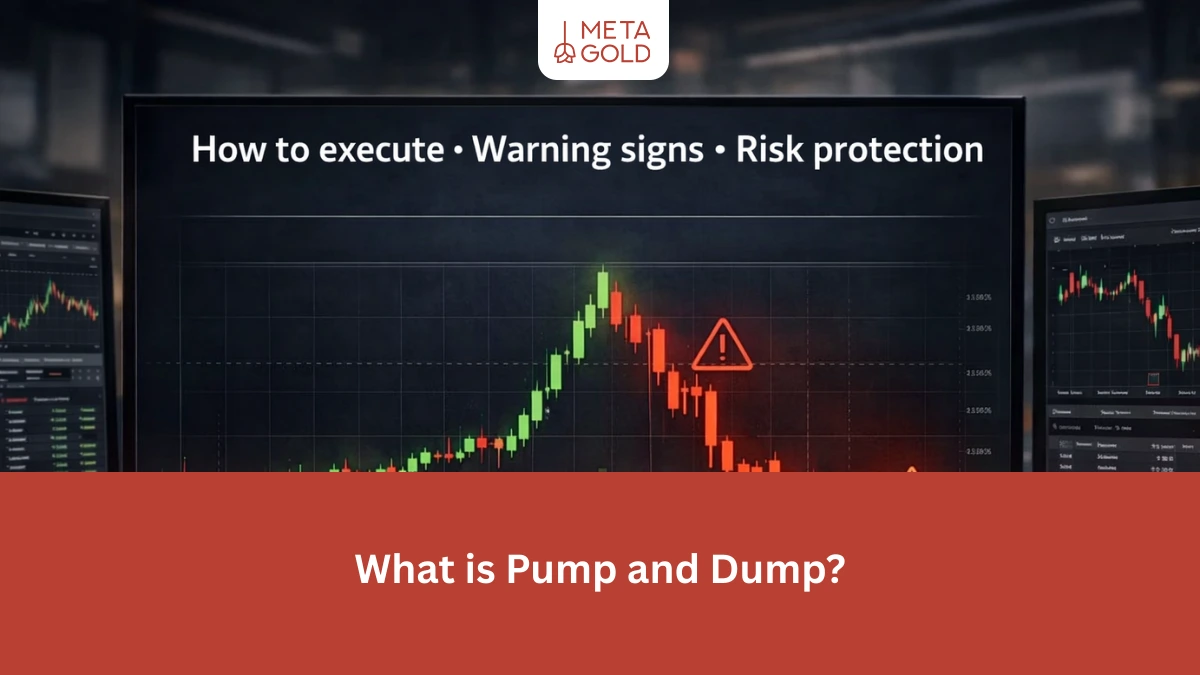
- Unusually large, short-term candlesticks : On 5- or 15-minute charts, the formation of several large green candles in a row can indicate a coordinated capital inflow. This rapid growth is usually followed by a heavy red candlestick, which marks the beginning of a decline.
Which currencies are most susceptible to pump and dump?
Not all cryptocurrencies are equally susceptible to pump and dump. Projects that are easier to control their prices and require less capital to create extreme volatility are usually targeted by this behavior.
- Small market cap coins : For example, consider a token with a market cap of $5 million. An influx of a few hundred thousand dollars in capital can quickly move its price by 30-40%.
- Unknown or new projects : Suppose a newly listed token does not yet have a clear whitepaper or a clear team. If a rumor of a “big partnership deal” spreads on social media, many users will buy without careful consideration, which will lead to a sharp rise and then a sharp decline.
- Memecoins and tokens without a specific use : Memecoins that are mostly based on jokes or internet trends usually do not have strong technical backing.
- Currencies with low liquidity : On a small exchange, if a token has low daily trading volume, a few heavy buy orders can suddenly drive the price up, followed by a coordinated sell-off, causing a sharp drop.
If you don’t know where to start, reviewing the criteria for choosing the best cryptocurrency to invest in can give you a clearer view of your decision.
Is pump and dump a type of scam?
When a group intentionally inflates the price of an asset by publishing false, exaggerated, or misleading information and then sells the asset at the peak, they are actually manipulating the market. This practice is considered a financial crime in many countries.
In such a scenario, the operators create artificial excitement, creating a wave of false demand. Ordinary investors, thinking they have come across a real opportunity, jump in. But as soon as the people behind the scenes start selling in unison, the price collapses and new buyers suffer losses. This is why the term pump and dump scam is often used to describe this behavior.
In short, if the price increase is based on false information and with the aim of selling at the peak, it can be considered a form of manipulation and deception of investors; behavior that ultimately ends up to the detriment of less experienced users.
Can you profit from pump and dump?
In theory, yes; but in practice, for most traders, it is very risky and akin to gambling. Only those who know about the pump before the wave starts or enter at an early stage can usually make a profit. These are often the ones who started the movement or have access to coordinated information.
Even if a trader can spot an initial rally, timing an exit can be very difficult. Extreme volatility, slippage, high fees, and liquidity lock-in in some tokens can prevent timely exits.
Is there a pump and dump strategy?
Some people on social media or signal channels claim that you can profit from these extreme swings with a specific pump and dump strategy. But the reality is that such an approach is not only unsustainable for most traders, but also very risky.
In coordinated pumps, the main information is usually in the hands of a limited group that designed the move. They know the exact entry and exit times, while ordinary users only notice the growth when a large part of the price increase has occurred. In such a situation, even if someone with technical analysis enters, the speed of the decline can eliminate the opportunity for a safe exit.
Furthermore, the cryptocurrency market is highly volatile and it is not always easy to tell the difference between real growth and manipulated growth. Many who think they can “ride the wave” end up buying at the top and selling at the bottom.
Pump and Dump Summary in Cryptocurrency
Pump and dump is one of the riskiest price behaviors in the crypto market, usually accompanied by artificial excitement, sudden price increases and rapid declines. In many cases, pump and dump scams are carried out by publishing misleading information, and inexperienced traders suffer the most. Your best bet is to check the market volume, team transparency, liquidity, and technical support of any project before entering it, and stay away from emotional decisions.
Pump and Dump FAQs
1. What exactly is pump and dump?
Pump and dump is a method of artificially inflating the price of an asset and selling it at its peak. After the coordinated selling, the price falls and new buyers lose out.
2. Is pump and dump illegal in cryptocurrency?
Price manipulation is illegal in traditional financial markets, but in the crypto market, if done with false information and intent to deceive, it is considered a violation or fraud.
3. How do we know if a currency is being pumped?
Sudden price increases without credible news, a sharp increase in trading volume, and emotional advertising on social media are common signs.
4. Can you profit from pump and dump?
Only those who enter earlier than others may profit. For most traders, the risk of entering late is too high.
5. Which currencies are most susceptible to pump and dump?
Tokens with low market caps, unknown projects, meme coins, and illiquid currencies are more susceptible to this behavior.