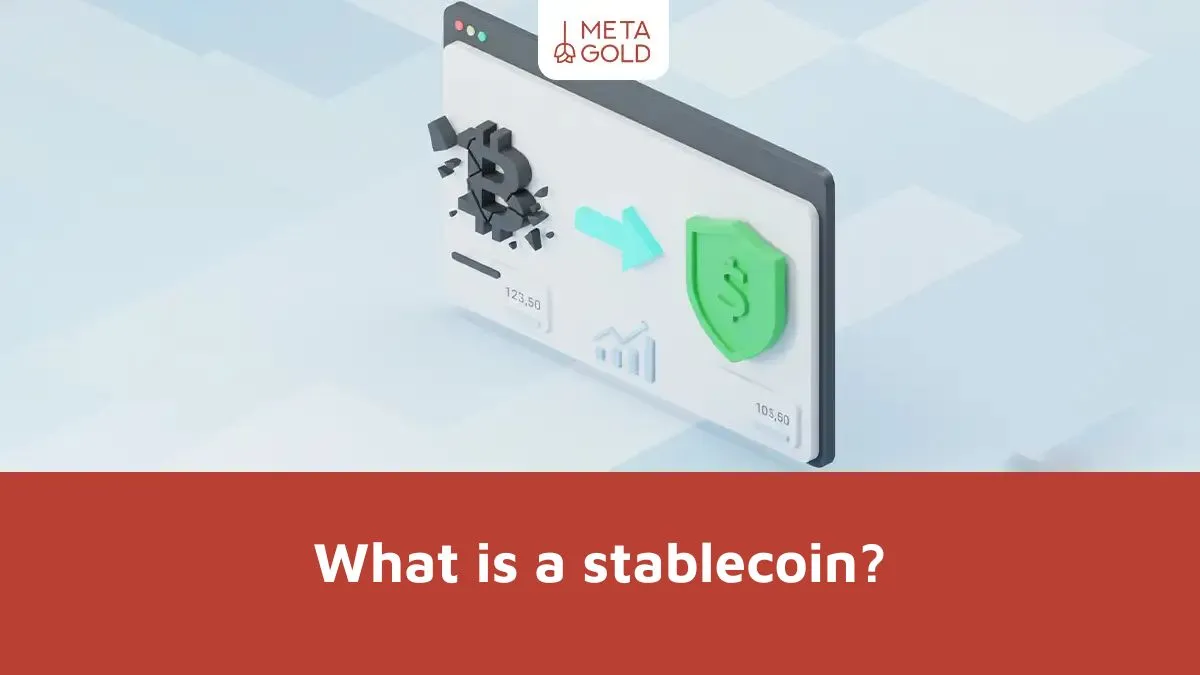

The crypto market is no joke; in its history, Bitcoin has even experienced a 30% drop in a single day. That means billions of dollars in capital were wiped out within a few hours, while worried traders could only watch. Price volatility is an inseparable part of the crypto market—but that doesn’t mean your capital has to shrink with every market dip. The main way to escape volatility is through stablecoins; these currencies are designed to keep the value of your money stable when the market isn’t doing well or when volatility is severe. In the following sections, we’ll talk more about what a stablecoin is and why you need it.

Why does the cryptocurrency market need stablecoins?
A volatile market is great for short-term trading, but it’s not suitable at all for spending money or preserving capital. You can’t rely on money that has one value in the morning and a different value at night. The banking system is also slow and full of red tape; in contrast, crypto is fast but lacks stability. That’s exactly why many people haven’t had the courage to get close to this market.
The role of stablecoins in preserving asset value
This is where stablecoins solve the problem. They have the speed of blockchain transfers, but their price is stable. When a trader makes a profit, they don’t need to withdraw their money from the exchange and get caught up in the bank’s long process. They can instantly convert their assets into a digital dollar; their profit is locked in, and market volatility no longer affects their capital.
What is a stable coin, and how does its price stay stable?
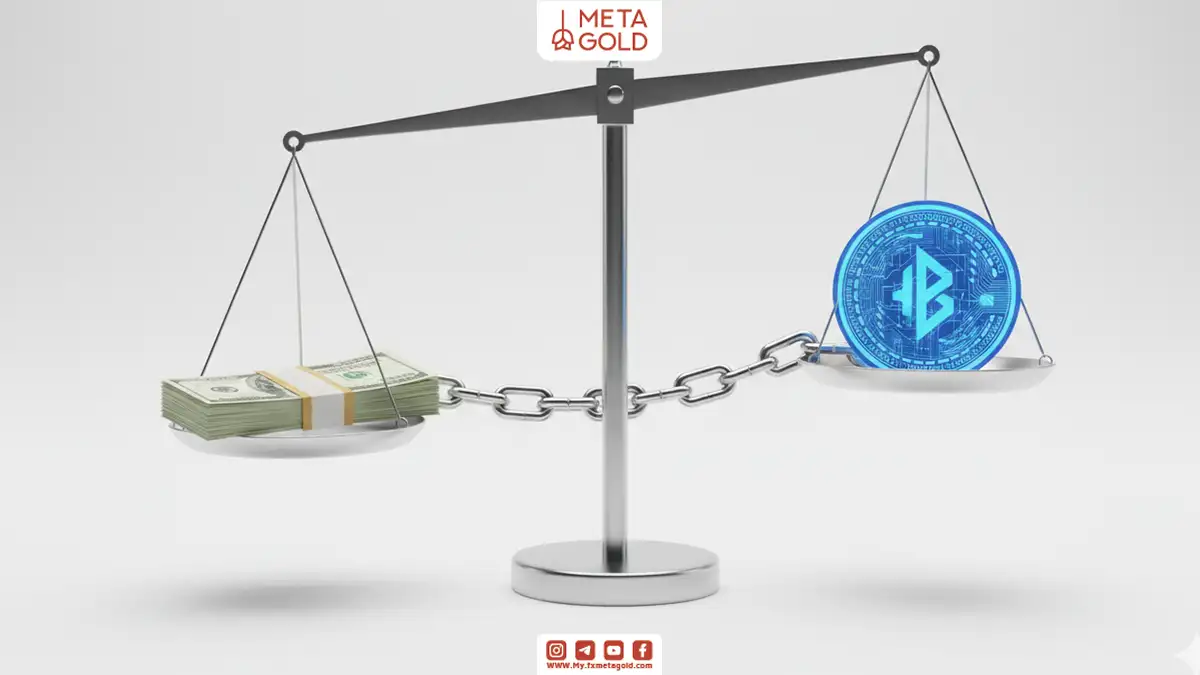
This digital asset is designed so that its value always remains stable. Its main mechanism is called pegging, meaning the token’s price is tied to a real-world asset. These coins have real-world backing and aren’t empty or hollow. For every digital unit that is issued, an equivalent amount must exist in reserve.
Asset backing in the real world
You might wonder what the term “stablecoin” exactly means and how it works. These coins remove market volatility so you can have peace of mind. One Tether should always be one dollar—no less and no more. This stability is maintained by holding reserves such as U.S. dollars, gold, or bonds in the issuing company’s bank accounts to preserve the token’s value.
The difference from other cryptocurrencies
The difference between these coins and other market assets is fundamentally structural. Bitcoin and Ethereum rise and fall based on supply and demand, with no fixed ceiling. A typical cryptocurrency has no physical backing, so its price is determined by buyers’ behavior. But stablecoins prevent this volatility and don’t allow market emotions to directly affect their price.
Getting to know the types of stablecoins
Stablecoins don’t come in a single form. The world of digital finance has tried different types of stablecoins to satisfy different users and manage various risks. Some are tied to the reserves of central banks, while others rely on mathematics and coding. Understanding these differences helps you choose the safest option based on your own risk tolerance.
1. Fiat-collateralized stablecoins
Different models have been designed to create stability in these assets. The most common group is fiat-collateralized stablecoins, which have a simple structure. The issuing company holds real dollars in a bank and issues a digital token. Tether and USDC fall into this category and hold a large share of the market because they are easier for people to use.
2. Commodity-collateralized stablecoins
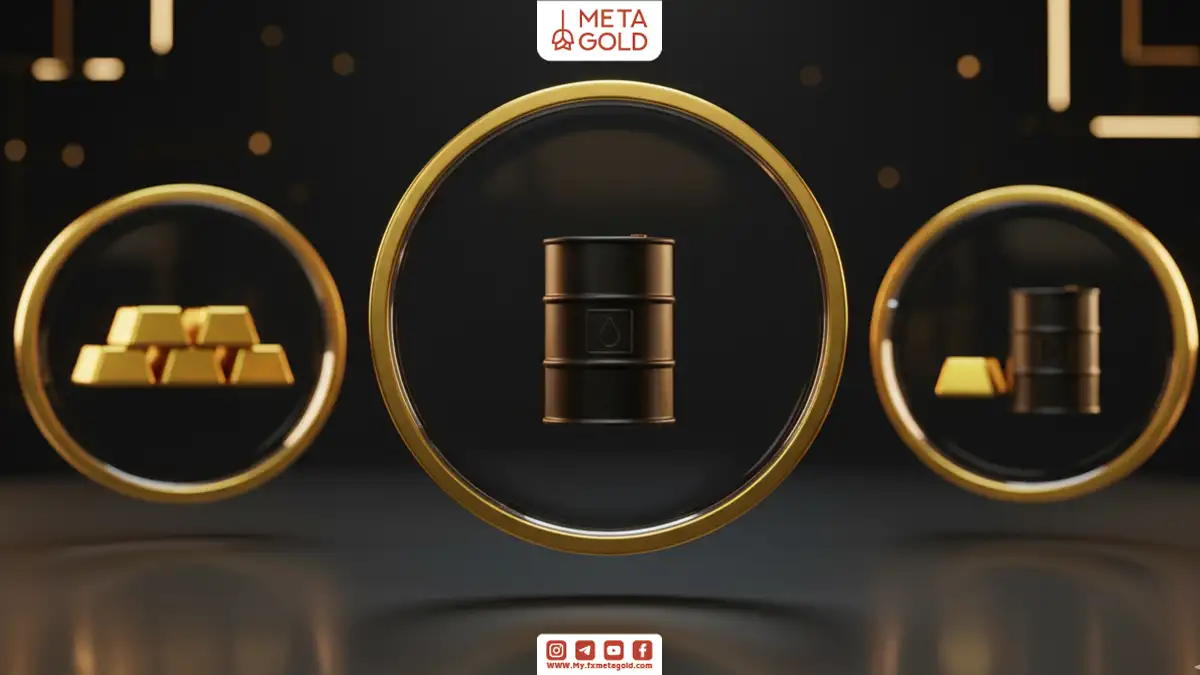
The second category includes coins backed by commodities. Gold has always been a safe haven, and now digital versions of it exist as well. Tokens like Paxos Gold (PAXG) represent a specific amount of real gold held in secure vaults. This type of stablecoin allows you to own gold in your wallet without physically buying and storing it.
3. Crypto-collateralized stablecoins
The third model is a bit more complex and, instead of cash, is backed by other cryptocurrencies. In systems like DAI, users lock up Ethereum as collateral and take out a dollar-denominated loan. Understanding the types of stablecoins is important because this system is decentralized.
4. Algorithmic stablecoins
The last category is algorithmic stablecoins, which have no collateral and control supply purely through code—a model that has caused major challenges in the crypto space. The well-known Terra (TerraUSD) project is an example of this type of stablecoin.
What is the main feature of stablecoins?
The answer to “What is a stablecoin?” and “Why has it become so important?” can’t be summed up in just one specific point. That’s because stablecoins do things that neither traditional money nor Bitcoin can do. Bank money is slow, and Bitcoin is volatile—but stablecoins don’t have these problems. They enable instant transfers and don’t require bank approval or paperwork. This speed and flexibility have made them an important tool for traders.
Price stability during market volatility
The most important feature of these assets is eliminating unpleasant surprises from financial transactions. A trader knows their holdings won’t be cut in half by tomorrow morning. If you ask what the main feature of a stablecoin is, the definite answer is preserving value at the peak of a crisis. When the whole market is falling and charts are turning red, someone who has converted their assets into stablecoins doesn’t suffer a loss.
High transfer speed and low fees
High transfer speed is the second factor that outperforms traditional financial systems. International money transfers through systems like SWIFT can take days and come with high fees. Using these currencies, you can send millions of dollars to the other side of the world in just a few minutes. Blockchain networks have no time or geographic limitations, which is why businesses have become highly interested in them.
Transparency and programmability
Transparency in transactions is another feature that can’t be overlooked. Every transaction is recorded on the network and visible to everyone. If you ask what one of the most attractive features of stablecoins is, you have to point to their programmability. Developers can build smart contracts on this infrastructure and launch automated lending systems without needing a bank.

The use of stablecoins in trading and preserving the value of capital
Stablecoins are an essential tool for keeping the market active. Instead of letting their money sit idle in banks, traders and companies use stablecoins to keep their capital moving. With these currencies, you no longer need a bank’s permission, and full control of your assets is entirely in your hands, so you can manage them however you want.
Using them as the primary trading pair
Scalping in the crypto market without having the right tools is not the right approach. Instead of cashing out their assets and leaving the exchange, traders convert them into digital dollars. The most important use of stablecoins is precisely this: they serve as the main trading pair, allowing the trader to keep liquidity ready for the next opportunities—without getting caught up in banking bureaucracy.
Facilitating cross-border money transfers
International money transfers have always been slow and expensive, but blockchain changed that equation. Sending money to a student in Europe or receiving freelance income with these currencies takes only a few minutes. Network fees are negligible compared to SWIFT, and this high speed has led small-scale international businesses to move toward using these coins and leave the traditional system behind.
Earning passive income and lending
Earning income from idle assets is another appeal of this market. You can lock your digital dollars on DeFi platforms and earn interest. This method is similar to a bank deposit, but without restrictive rules. Although the risks of these platforms should not be ignored, this use case is another stablecoin application that has attracted risk-averse investors to crypto.
A list of the top stablecoins in the market and a comparison of them.
The market is full of tokens that claim to have a stable price, but the reality is different. Experience has shown that trusting the wrong projects can wipe out capital. Not all stablecoins are safe. Below, we introduce the most important and most reputable options in the market so you know which ones have proven themselves—and why traders turn to them to protect their money.
1.Tether (USDT)
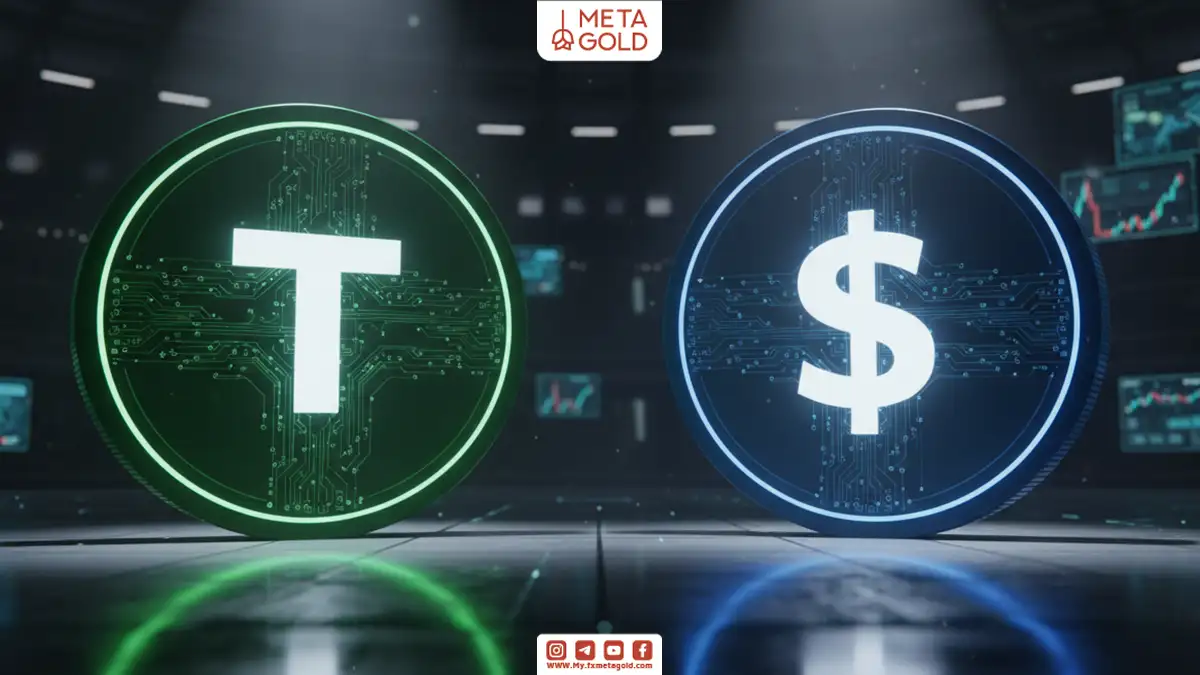
Tether (USDT) is the first and largest stablecoin in the world. When someone in the market wants to convert their money into dollars, their first choice is Tether because it’s available on all exchanges and has high trading volume. Although there has been some controversy about the lack of transparency around its reserves, it still enjoys the greatest trust among traders.
2. USD Coin (USDC)
Tether’s main and serious competitor is USD Coin (USDC), which is issued by the Centre Consortium (Coinbase and Circle). This coin focuses on transparency and publishes monthly financial reports. Traders who are especially concerned about legal audits usually choose this currency because it is more closely aligned with U.S. regulations and carries fewer risks than Tether.
3. Binance USD (BUSD) and Dai (DAI)
Binance USD (BUSD), which is backed by the world’s largest exchange, and Dai (DAI), which is decentralized. Dai is not controlled by any company; its users govern it. This list of stablecoins covers a wide range of needs.
| Name | Type of backing | Type of stablecoin |
|---|---|---|
| Tether USD Coin Binance Dollar True USD | U.S. dollars and Treasury securities | Fiat-backed |
| Tether Gold Pax Gold Digix Gold | Stored physical gold | Commodity-backed |
| Dai | Ethereum and other cryptocurrencies (collateral) | Crypto-backed |
| Frax Ample Fourth | Code and mathematical algorithms | Algorithmic |
The dangers and risks of investing in stablecoins.
Stability in this market is fragile. Stablecoins are meant to be safe, but the history of cryptocurrencies has shown that nothing is guaranteed. Overtrusting the stability of these currencies without understanding their risks can wipe out your entire capital at the very moment you least expect it. Below, we examine the most important risks.
The risk of losing the price peg (depegging)
Don’t let the word “stable” fool you—security in this market is not 100%. The biggest fear for any investor is depegging, meaning the price falls below one dollar. This happened to Terra (UST) and destroyed it. If the market loses confidence or there isn’t sufficient backing, the price collapses, and you’re left holding tokens whose value has evaporated.
Unclear legal status and lack of transparency
Some projects don’t clearly state what backs your money, which means hidden risk. Government regulations are also still incomplete, and a new rule can be written any day. Therefore, fully trusting these currencies and putting all your capital into them is not a wise decision.
What we learned about stablecoins
In this article, we examined what a stablecoin is and realized that understanding new financial tools is one of the available ways to cope with inflation and volatility. These currencies are digital cash that gives you speed and freedom of action, but they are not risk-free. Our goal is to see the reality of the market. To stay safe from market fluctuations and buy securely, you can reach out to the Metagold team and trade wisely.
Frequently Asked Questions about Stablecoins
1. What does “backing” mean in a stablecoin, and why is it important?
Backing refers to real, tangible assets—such as U.S. dollars, gold, or bonds—kept in the company’s reserves so that the token’s value can remain stable.
2. Do the prices of all stablecoins always stay exactly fixed at one dollar?
No. Minor fluctuations always exist, but if market confidence is lost, the risk of depegging—or a sharp price collapse—can arise at any time.
3. What is the main difference between Tether (USDT) and USD Coin (USDC)?
The difference lies in their issuers: USD Coin offers greater financial transparency and more rigorous audits than Tether.
4. Which type of stablecoin carries higher investment risk?
Algorithmic stablecoins—which operate without physical backing and rely solely on code—have the most fragile structure and are generally higher risk.