
If you are wondering what the Wyckoff Method is, the short answer is: Wyckoff is a behavioral framework for chart reading that helps you understand what stage of its cycle the market is in—accumulation, growth, distribution, or decline—and why price is reacting within ranges.
In this Wyckoff method tutorial, concepts from the basics to practical implementation on the chart are explained, and you will be introduced to the three laws of Wyckoff, the five-step model, the concept of the “Composite Man”, and the differences between the bullish and bearish Wyckoff patterns. In the end, you will have a practical framework for implementing the Wyckoff Method on the chart.
What is the Wyckoff model?
The Wyckoff method is an analytical framework within Wyckoff theory that explains price behavior in terms of recurring market cycles and helps you understand what stage the market is in. When this pattern is identified on a chart, it can be used to separate normal and random ranges from meaningful ranges and determine whether the market is accumulating or distributing, and whether an uptrend or downtrend is more likely to begin.
In this method, the main focus is on the relationship between supply and demand, price reactions within ranges, and signs of strength or weakness, rather than making decisions based solely on the appearance of the candles. As a result, the Wyckoff is more of a map for identifying market phases and reading price behavior within ranges, rather than a fixed pattern.
The Three Laws of Wyckoff Theory
Three main laws in Wyckoff’s theory are used to better understand the logic behind price movements, supply and demand, and to more accurately identify market phases. These laws are summarized in three sections: “Supply and Demand,” “Cause and Effect,” and “Effort vs. Result.”
Supply and demand sector
In Wyckoff’s theory, price movement is seen as the result of the superiority of supply or demand, and this superiority is seen in the price’s reaction to levels and ranges. When demand is stronger, breakouts are seen as continuations of the move and shallow pullbacks, and when supply is dominant, rallies are neutralized more quickly and followed by heavier pullbacks.
Practical takeaway : If the move is quickly neutralized after breaking the level or the price returns to the range, the dominance of the other side should be taken more seriously.
Cause and effect section
In this rule, the range of the range is considered as the “cause” and the subsequent movement as the “effect”, and the longer and more coherent the range is, the greater the capacity for the subsequent movement is assumed. Therefore, meaningful ranges are seen before larger movements and should not be equated with short, random fluctuations.
Practical takeaway : Before pursuing the next move, the quality and structure of the previous range should be taken as a benchmark.
Effort vs. Result Section
In this rule, “effort” is measured by the volume and extent of the move, and “result” is measured by the actual rate of price advance in the same direction. If there is a lot of effort but little result, that side of the market is perceived as weak, and if there is a big result with less effort, that side’s strength is considered more likely.
Practical takeaway : When a lot of energy is expended but the price does not move forward, the possibility of a reversal or a movement trap should be taken more seriously.
What is the Wyckoff Cycle? The 4 Main Market Phases
In Wyckoff’s theory, the market does not move in a linear and uniform manner, but rather in cycles that alternate between phases of range and trend. By understanding this cycle, it becomes more accurate to determine whether the market is “preparing for a move” or “continuing a trend,” and meaningful ranges are better separated from random fluctuations.
- Accumulation : The formation of a range and absorption of selling pressure are seen along with signs of strengthening demand at the bottoms.
- Growth (Markup) : The price exits the range and forms an upward trend, accompanied by higher highs and lows.
- Distribution : The formation of a range is seen after growth and a gradual increase in supply, with the continuation of the ascent becoming more difficult.
- Markdown : A bearish breakout from the range and the start of a downtrend, accompanied by lower lows.
A bullish Wyckoff method is seen when the accumulation is nearing completion and the onset of a mark-up on the chart is more likely. A bearish Wyckoff method is seen when the distribution is more complete and the onset of a mark-down on the chart is more likely.
Wyckoff’s 5-step approach
Wyckoff’s five-step approach is a practical way to identify the market stage rather than guessing and only seek entry/exit when the structure is complete. The five steps are typically implemented as follows:
1- Identifying general direction and context
First, you determine what the market was like before the downturn:
- If it was a decline before, you are probably dealing with accumulation.
- If there was an uptrend before, you are probably facing Distribution.
2- Defining the range of suffering and boundaries
Then you define the boundaries of suffering:
- Where is the ceiling or floor of suffering?
- How many times has the price reacted to these boundaries?
- Is suffering “meaningful” or just a short-term fluctuation?
3- Identifying key events and phases A to E
Inside the range, you’ll find standard Wyckoff signs:
- In accumulation : PS, SC, AR, ST, then SOS and LPS
- In distribution : PSY, BC, AR, ST, then UTAD/SOW and LPSY
At the same time, you check whether the market is moving from A to E (end of previous trend → consolidation → test/trap → direction formation → exit).
4- Confirming strength/weakness with the three laws of Wyckoff
Here you can measure the quality of the movements so you don’t get fooled:
- Supply and demand : Are the failures persistent or quickly offset?
- Effort vs. Result : High volume and energy but little progress? (Weakness/Trap Warning)
5- Creating a trading scenario: entry, stop loss, take profit
Once the structure is more complete, you set up the scenario:
- Conservative entry : After SOS and pullback to LPS (bullish) / After SOW and pullback to LPSY (bearish)
- Stop Loss : Behind the key event or outside the range (below LPS or above LPSY)
- Take Profit : The next level or risk-reward ratio, such as 1:2.
Wyckoff’s trading strategy
Understanding Wyckoff method is useful when entry and exit rules are specified on the chart. The goal of the Wyckoff Method is to avoid trading based solely on guesswork and to enter when structural signals are seen on the chart and risk remains manageable.
Because accumulation and distribution events can create price traps, defining an entry scenario and managing risk before trading is considered essential.
Conservative entry point
In this scenario, entry is made when a logical pullback has formed after a signal of strength or weakness and the LPS or LPSY area is seen as confirmation of market behavior.
- In an uptrend, entry is considered more logical after SOS and consolidation on the pullback.
- In the bearish case, after SOW and a weak pullback to LPSY, a more cautious entry is made.
Aggressive entry point
In this scenario, entry occurs earlier, but only when the higher context time is aligned and the valid test is within the observed range.
- In accumulation, a successful test near the bottom of the range is considered a sign of supply reduction.
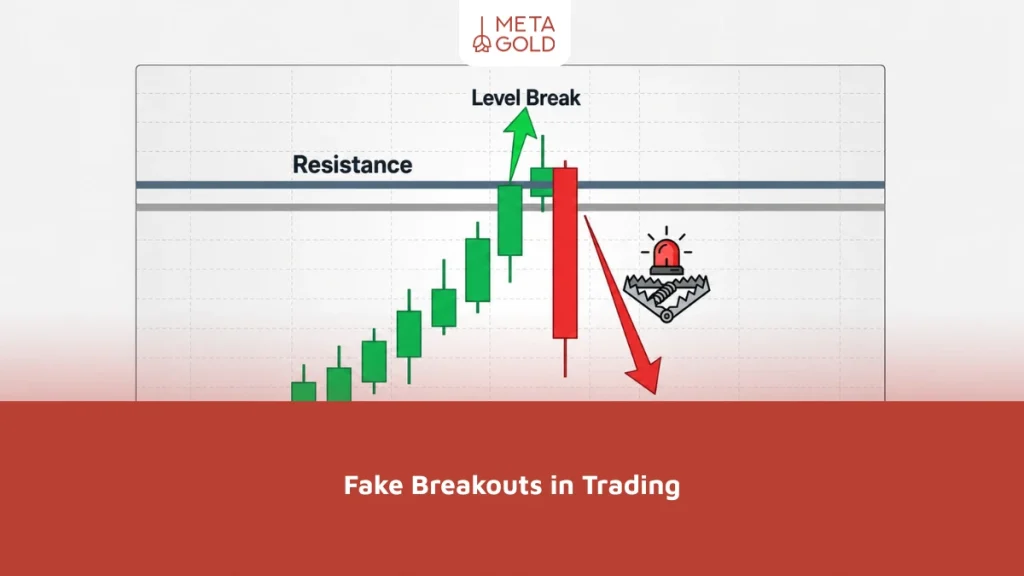
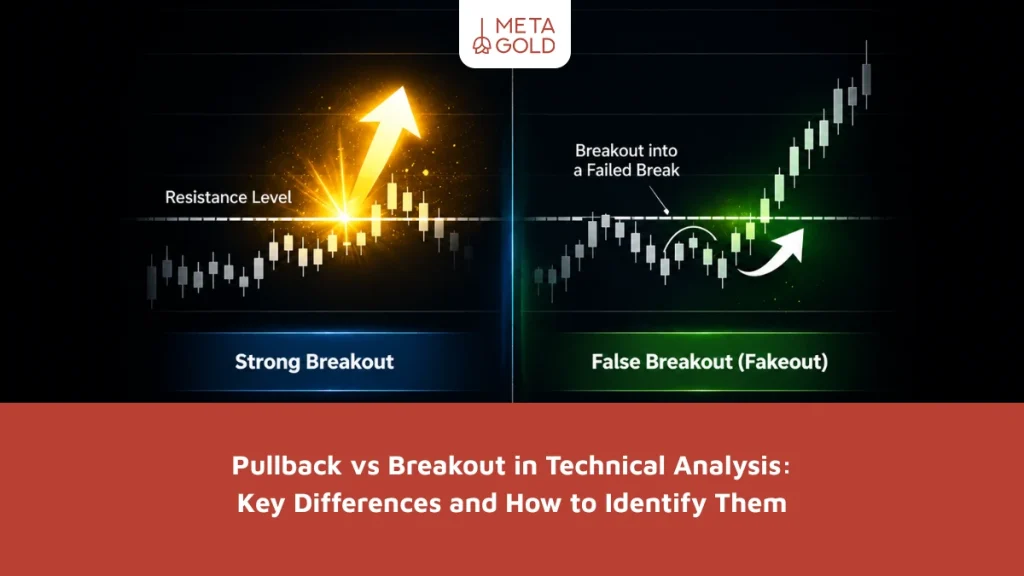
- In distribution, a false break and a quick return to range can be a trap alarm.
Limit of loss
The stop loss is usually placed after a key event to prevent it from being triggered by noise within the range and to preserve the structural logic of the trade.
- For a bullish scenario, the stop loss is placed slightly below the test floor or below the LPS area.
- For a bearish scenario, the stop loss is placed slightly above the pullback ceiling or above the LPSY.
Profit limit
The profit limit can be set at the next resistance or support, and it is best to keep the risk-reward ratio at least 1:2 to keep the trade defensible from a money management perspective.
What is the Composite Man Wyckoff method?
In Wyckoff’s theory, the “Composite Man” is not considered a real person, but rather a metaphor for the influence of big players and smart money on market behavior. The point is that large orders are usually executed in a way that provides sufficient liquidity, which can lead to traps, tests, and deceptive moves in the range.
But one should not jump to conclusions and attribute every fluctuation to manipulation. It is necessary to follow behavioral evidence on the chart and it is better to examine the price reaction to levels, the quality of breakouts, the quick return to the range and the difference in “effort and result” to make a more accurate judgment.
Advantages and disadvantages of the Wyckoff model
To make the use of Wyckoff’s theory more accurate, it is best to recognize the benefits and limitations, along with common errors, before implementation to form more realistic expectations:
| Feature or Parameter | Type | Practical Explanation | Impact on Trading Decisions |
|---|---|---|---|
| Market cycle analysis (accumulation and distribution phases) | Advantage | Makes market cycles easier to identify and creates a more structured analytical framework | Helps set more realistic expectations for price movement |
| Supply and demand relationship | Advantage | Improves understanding of price reactions and helps identify meaningful trading ranges | Provides deeper insight into the balance of power in the market |
| Trade timing | Advantage | Creates a clearer logic for entry and exit points | Reduces the likelihood of impulsive or poorly timed trades |
| Level of subjectivity | Drawback | Without enough practice, the same structure can be interpreted in different ways | Increases the risk of incorrect analysis |
| Noise on lower time frames | Drawback | Lower time frames often contain more noise and false signals | Reduces accuracy in scalping or short-term trades |
| Dependence on context | Drawback | Requires confirmation from the higher time frame trend and key levels | Weakens conclusions when the chart is analyzed in isolation |
Common errors in the Wyckoff model
The mistakes that contribute the most to the failure of Wyckoff analysis and should be avoided are:
- Each range is labeled as either a cluster or a distribution, and random ranges are confused.
- Key events such as ST, SOS or SOW are not closely monitored and entry is made early.
- False ceiling failures such as UTAD are interpreted as true failures and trapping occurs.
- Stop losses are not placed behind the structure and risk management is ignored.
Summary of the Wyckoff model
The Wyckoff model is a behavioral framework for reading market cycles that helps to better identify accumulation and distribution phases and make more structured chart decisions. However, the results are more reliable when the context of the higher time frame trend and risk management are considered and hasty interpretations are avoided.
To learn about other complementary methods and categories, it is recommended to read the article on trading patterns .
Wyckoff Model FAQs
1. What is the Wyckoff Method and when is it most valid?
The Wyckoff method is a framework in Wyckoff theory for identifying market cycles and the accumulation and distribution phases in a chart. It is considered more valid when it forms within a significant range after the previous trend and clear signs of strength or weakness are seen.
2. What is the difference between ascending and descending Wyckoff?
A bullish Wyckoff is seen near the end of accumulation and on the verge of a markup. A bearish Wyckoff is usually seen near the end of distribution and on the verge of a markdown.
3. How do Wyckoff’s three rules help?
With the law of supply and demand, the dominant direction is better read and the quality of responses is better measured to levels. With the laws of cause and effect and effort versus result, meaningful suffering is better separated from random suffering.
4. What is UTAD and why is it important?
UTAD is considered a false break above the range ceiling in the distribution, which is seen with a quick return to the associated range. It is taken as a serious weakness warning because a buying trap can be created.
5. Where do I start to identify the pattern on the chart?
First, the higher time frame trend and clear ranges after the trend are identified. Then, key events such as SC/SOS or BC/UTAD are examined on the same range and risk management is observed.