
Imagine entering a market that has neither the excitement of a bullish rally nor the fear of a free fall. The price swings like a pendulum between a certain high and a certain low. There is no clear trend here. This is the realm of range trading.
Many traders seek to catch trends, but what is range trading and how can it be a profitable opportunity amidst these seemingly neutral movements?
We will not only explain the nature of this market, but also explore its detection tools, trading strategies, and most importantly, its hidden risks. By the end of this article, you will know how to identify the pain market, trade it, and avoid its common pitfalls. Let’s get started.
What is range trading?
At the heart of financial markets are two main conditions: trends and ranges. If you think of a trending market as a flowing river with a defined direction, a range market is more like a calm lake with the water level rising and falling between two clearly defined banks.
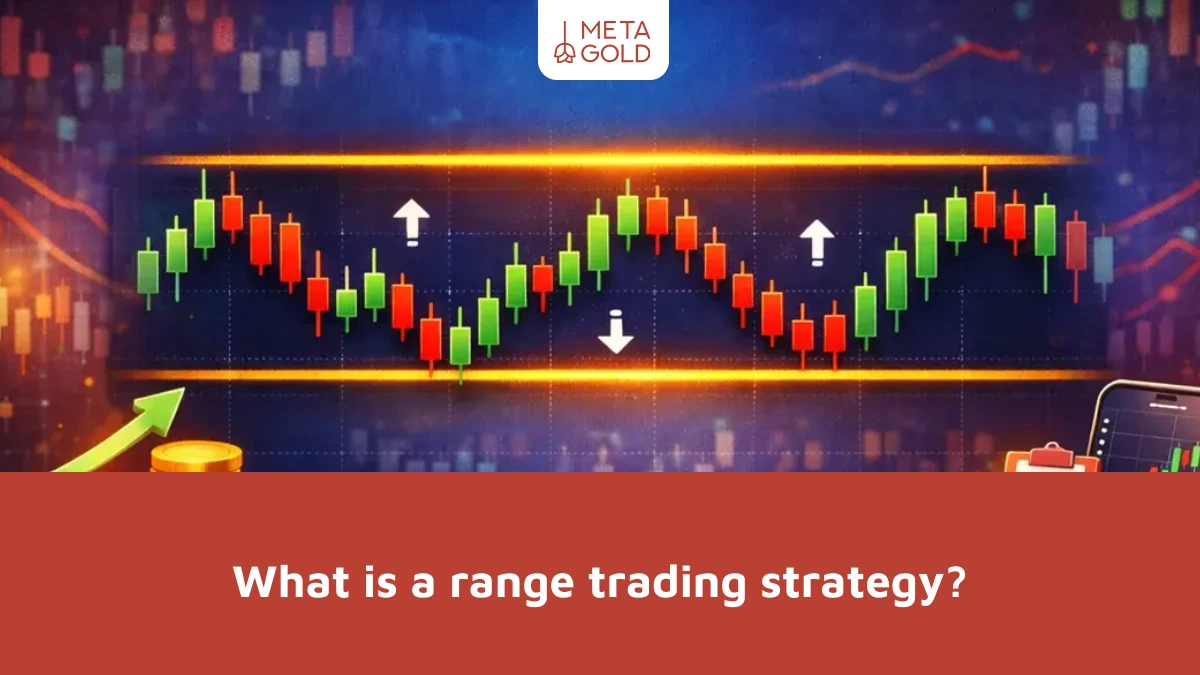
From a technical perspective, a range market is a period when the price of an asset fluctuates between two key support and resistance levels, failing to break through either of them decisively. These levels act like the top and bottom of a horizontal channel. In such a situation, the forces of supply and demand are roughly in balance.
When the price approaches resistance, sellers enter the fray and push it down. When the price reaches support, buyers appear and push the price up. This repetitive fluctuation forms the core of range trading.
How do traders recognize a bear market?
Correctly identifying a bear market is a critical, practical skill that goes beyond visual judgment and requires objective tools. Here, we look at the systematic, reliable methods that professionals use.
1. Price structure analysis
The first and most direct way is to look at the raw chart (without indicators). You are looking for specific patterns:
- Consecutive hits and bounces from horizontal levels: If the price has hit and bounced off a level at least twice, that level is valid. The presence of a nearly level top and bottom is an early sign of trouble.
- Doubtful candlesticks : The appearance of Doji, Spinning Top, or small-bodied candles with long shadows in support-resistance areas indicates equal power between buyers and sellers.
- No higher-lower highs and lows : In an uptrend, you see higher highs and higher lows. In a range, these highs and lows are roughly in line.
2. Using trend recognition indicators
These indicators will give you a quantitative answer:
- Moving Averages (MAs) : When the price is consistently oscillating around the major moving averages (e.g. the 50 MA and 200) and these averages themselves are compressed and without slope, the market is likely in a range.
- ADX Indicator : This indicator measures the strength of a trend, not its direction. ADX readings below 25 (and especially below 20) usually indicate a trendless or ranging market. This is an important tool for identifying range trading.
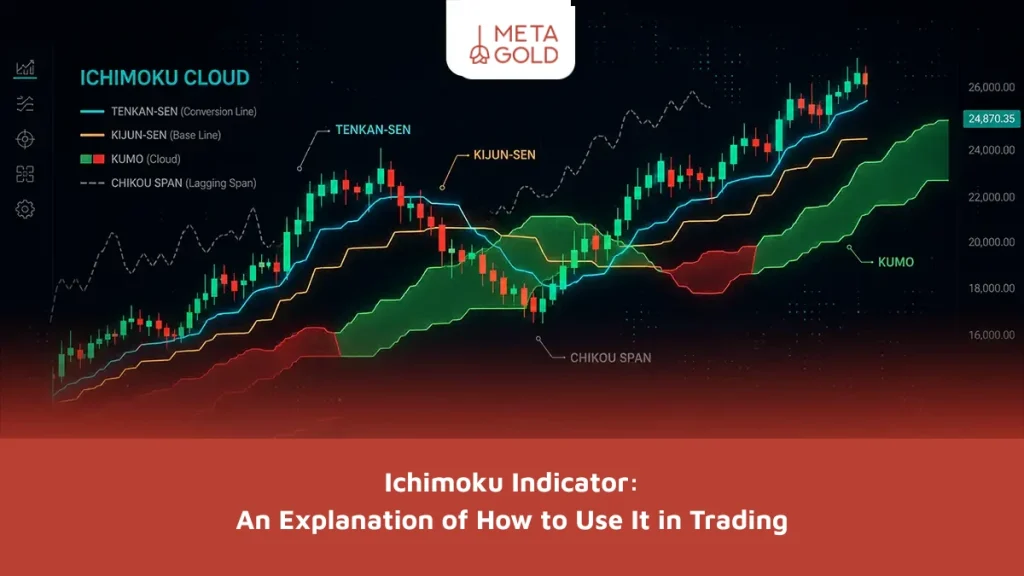
- Ichimoku : When the price is stuck inside the Kumo cloud, it indicates a neutral and trendless market.
3. View trading volume
Trading volume in a ranging market is often lower than during breakouts or strong trend moves. If the price approaches support-resistance levels but volume does not increase significantly, the price is more likely to bounce off that level and continue to range.
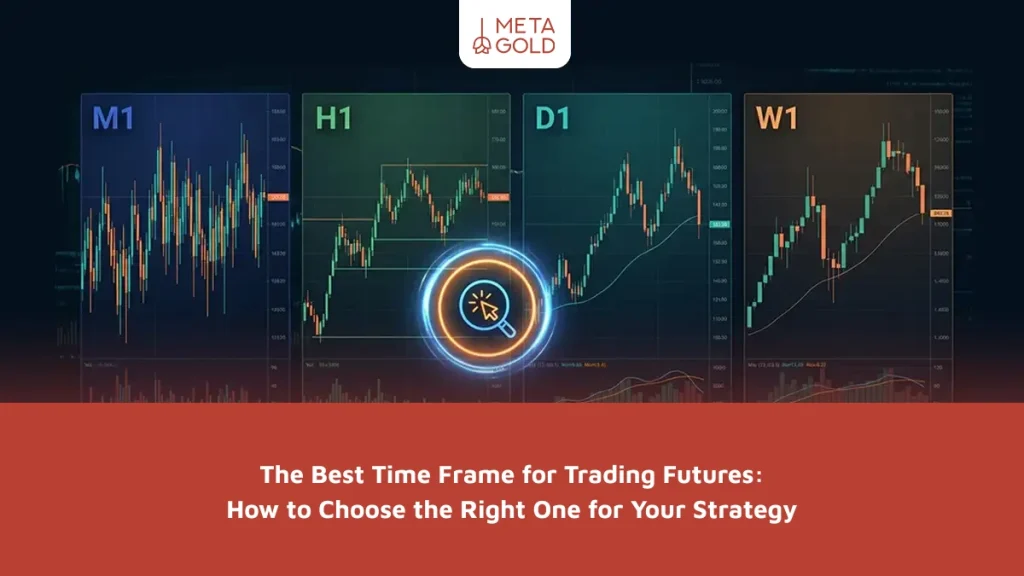
We recommend that you examine the market on multiple timeframes before confirming it as a range. It may appear to be a range on the 1-hour timeframe, but on the daily timeframe it may be part of a correction in a larger trend. Consistency of timeframes increases the validity of your analysis.
Range Trading Detection Tools
Success in range trading depends above all on understanding the concept, training in range trading , and choosing and combining the right tools. Unlike trends, range trading tools should focus on accurately identifying boundaries and reversal points. Here we will look at the main tools and how to apply them in practice.

1. Horizontal support and resistance levels
Horizontal support and resistance levels are your most important and simplest tools. Drawing these lines is not based on guesswork, but on price history:
Find multiple highs and lows where the price has reacted and bounced in the past and connect them with horizontal lines. Buy near the support line and sell near the resistance line. The more hits, the stronger the level. Remember, these are areas, not exact lines.
2. Saturation detection oscillators
Since the price fluctuates within a range, oscillators can be very useful for identifying potential reversal points.
- RSI (Relative Strength Index) : In a range-bound market, a RSI crossing below 30 (oversold) can be a signal that support is approaching and a bullish move is imminent. A crossing above 70 (oversold) can also be a warning that resistance is approaching.
- Stochastic : Similar to RSI, but more sensitive to recent price movements. Crossovers of the %K and %D lines in oversold areas can be additional confirmation.
Please note that these signals are only valid in a ranging market. Using them in a strong trending market will result in receiving premature and potentially damaging signals.
3. Bollinger Bands
The Bollinger Bands tool is very telling for ranging markets.
- Identifying Compression : When bands compress together, it indicates a decrease in volatility and often a continuation of the trend. This compression is often the prelude to a powerful breakout.
- Range Usage : In a fixed range, price tends to hit from the upper band to the lower band. Hitting the upper band can confirm the proximity of resistance and hitting the lower band can confirm the proximity of support.
4. Classic chart patterns
Some patterns inherently indicate a continuation of the neutral situation.
- Rectangle : The rectangle pattern is a range market that fluctuates between two horizontal parallel lines.
- Symmetrical Triangle : Although the symmetrical triangle is a continuation pattern, within it, the price fluctuates within a compressible range and can be traded using a range trading approach when hitting its sides.
What are the benefits of range trading?
Benefits of Range Trading For the trader with the right tools, a range market can offer a more controlled and predictable environment than volatile trending markets. Understanding the benefits of range trading will help you incorporate this style as a strategic option in your trading toolbox.

1. Clarity of entry levels, take profit and stop loss
In a valid range, the important levels are predetermined. You know exactly where to wait (near support to buy or resistance to sell), where your profit target is (opposite levels), and where your stop loss should be (behind those important levels).
2. Higher trading frequency
Since the price fluctuates between two levels, if the range is stable, more trading opportunities than expected are created to form and enter a trend.
3. Reducing psychological stress caused by the process
Following a strong trend requires enduring pullbacks and often entering at seemingly inappropriate prices. In contrast, range trading is defined by buying at the bottom and selling at the top, which is more logical and tangible to the human mind. This can lead to better execution of the trading plan.
4. The effectiveness of reversal strategies
A ranging market is an ideal environment for mean reversion strategies. These strategies are based on the logical assumption that price in an equilibrium range tends to move back from the extremes (overbought or oversold) towards the center of the range. Tools like RSI and Stochastics work well in this environment.
What are the disadvantages of trading in a range market?
While range trading has its unique advantages, it is not without risk. Ignoring its disadvantages is tantamount to ignoring the risk of losing capital. Success in this style requires a thorough understanding of these threats and managing them.
1. Risk of false failure and price deception
Price may seemingly break through a key support or resistance level (false breakout), trap traders, and then forcefully retrace back into the range. This move can trigger your stop losses and then continue in the direction of the main trend.
2. Declining profits compared to trends
In a strong trending market, the profit from a successful trade can be very large and continuous. But in a ranging market, your profit is predetermined by the width of the range. If the range is only 100 pips wide, even a perfectly successful trade will only yield a maximum profit of 100 pips (minus the spread).
3. Strong dependence on precise arrival timing
Unlike trend trading, where you can be flexible by averaging costs or entering on pullbacks, success in range trading depends on very precise timing of your entry near the boundaries. Entering in the middle of the range usually creates an unfavorable risk-reward ratio and exposes you to a price reversal.
4. Recurring transaction fees
Higher trading frequency means paying more in spreads and fees. In a narrow range, these costs can eat up a significant portion of your net profit. A range trading strategy should always factor in trading costs when calculating profitability.
5. Sudden market change
We recommend never putting all your capital into a trade based on the assumption that the market is ranging. Always assume that the ranging is over. Using a stop loss after the price reaches the middle of the range can preserve some of the profit in case of a real breakout.
The difference between range trading and other trading styles
Understanding where range trading fits within the vast array of trading styles in Forex and other markets is key to choosing the right strategy for your personality and market conditions. This comparison is not meant to be a show-stopper, but to clarify the fundamental differences.
| Trading Style | Best Market Type | Core Idea | Common Timeframes | Typical Entry/Exit | Main Tools | Main Risks |
|---|---|---|---|---|---|---|
| Range Trading | Sideways market (clear support & resistance) | Buy near support, sell near resistance | 1H, 4H, Daily | Enter near boundaries with reversal confirmation; exit at opposite level | Support/Resistance, RSI, Stochastic, Bollinger Bands, chart patterns | False breakouts, entering mid-range, trading costs in tight ranges |
| Trend Trading | Trending market (uptrend/downtrend) | Follow the trend until weakness appears | 4H, Daily, Weekly | Enter on pullbacks or breakouts in trend direction; exit with trailing stop or reversal signals | Moving Averages, market structure (HH/HL, LH/LL), channels | Losses in ranging markets, fake signals, exiting too early |
| Day Trading | Short-term trend or range | Open and close trades within the same day | 5m, 15m, 1H | Quick entries and exits; tight time and volatility control | Short-term price action, key levels, sometimes oscillators/news | High stress, fast decisions, fees/spread costs, market noise |
| Position Trading | Long-term macro trends | Hold positions for weeks to months/years | Daily, Weekly, Monthly | Enter based on macro view; exit on cycle or fundamental shift | Fundamental analysis, long-term structure, key levels | Deep pullbacks, slow short-term returns, major event risk |
| Swing Trading | Both trend & range | Capture multi-day to multi-week price swings | 4H, Daily | In range: buy low/sell high; in trend: trade pullbacks | Support/Resistance, patterns, MAs, RSI/MACD | Getting stuck between range/trend bias, overnight news risk |
Is range trading right for you?
Range trading is a specialized and systematic approach to extracting profits from trendless markets. As we have seen, this style is based on the accurate identification of horizontal support and resistance levels, the principled use of oscillators in saturated conditions, and solid risk management.
Understanding that markets spend a significant portion of their time in the suffering phase makes this skill even more important. However, success in it requires respecting the dual nature of the market; suffering is not always permanent, and decisive failures are its end.
The purpose of this article was not only to educate and present the concept or how to trade in the range market ; rather, we attempted to review, with complete transparency, both the benefits of range trading and its serious and sometimes hidden risks.
The ultimate path is to turn this knowledge into a personalized trading plan that includes clear rules for entry, exit, and money management. If you are at the beginning of the path, it is better to read the article ” What is Trading and the Role of Money Management in It” before creating a plan.
For a more comprehensive review and comparison of this style with other approaches such as trend trading or swing trading, as well as to study more practical examples, you can refer to the educational section of the MetaGold Expert Suite. These resources will help you broaden your perspective and build a strategy that suits your trading personality.
Range Trading FAQs
1. Does range trading work in all markets?
No. The effectiveness of this style depends on high liquidity and more rational market behavior. Markets with low liquidity or high manipulation (such as some small cryptocurrencies) may not form valid and reliable ranges. In regulated markets such as forex, major currency pairs or major indices, this strategy works best.
2. What is the best time frame for range trading?
There is no absolute answer. Ranges on higher timeframes (daily and weekly) have more validity, but fewer opportunities. Lower timeframes (1-hour, 4-hour) have more opportunities, but with a higher risk of false breakouts. Combining analysis on the higher timeframe to identify the main range and using the lower timeframe to time your entry is a balanced approach.
3. How can we know the true defeat of suffering and not be deceived?
A true breakout is usually accompanied by the following factors: a candle (preferably a long candle) closing outside the range, a significant increase in trading volume in the direction of the breakout, and confirmation of a trend strength indicator such as ADX (going above level 25).
Waiting for the price to pullback to the broken level (which now acts as reverse support or resistance) and then entering is a more cautious approach.
4. Should I enter a trade if the price is in the middle of the range?
In range trading, you need to wait for the price to reach support (to buy) or resistance (to sell) areas and look for signs of a reversal (such as a reversal candlestick pattern or saturation in the oscillator).
5. Is the range trading style suitable for novice traders?
It can be a controlled starting point, as entry levels, take profit and stop loss levels are already known. However, beginners should first master the correct identification of a range (and not a short-term trend) and not be oblivious to the risk of false breakouts. Practicing on a demo account is essential before trading for real.