
What is regulation?
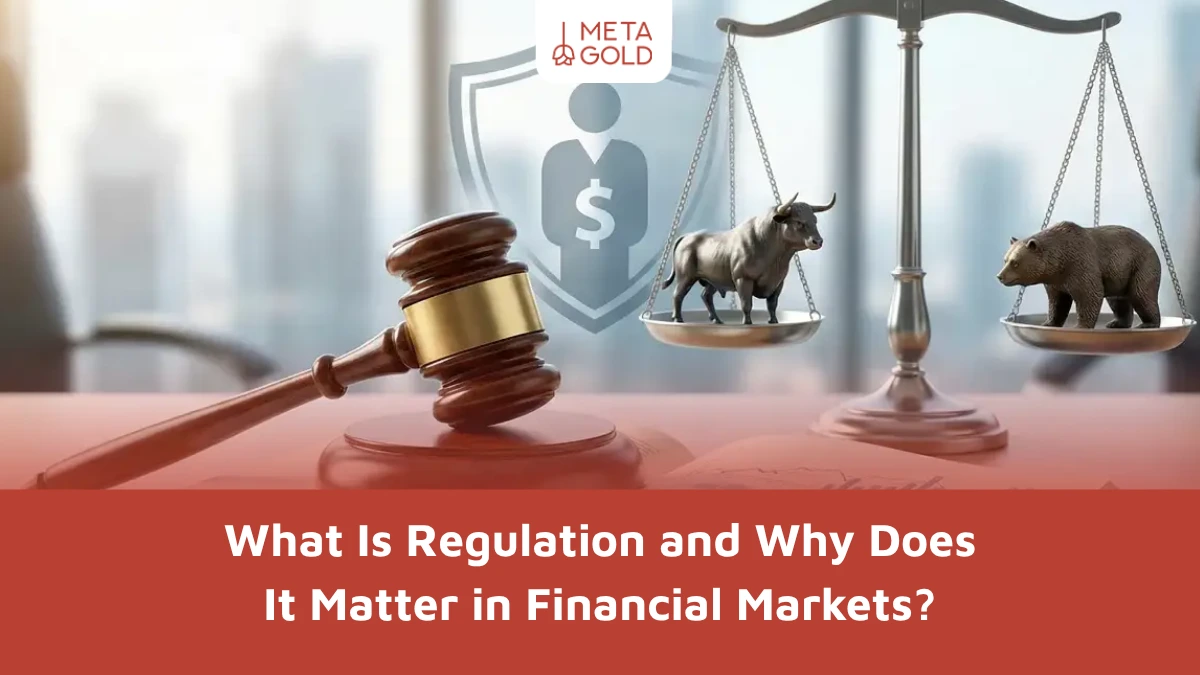
To understand what regulation is, we need to look at the structure of financial markets. In standard definitions, regulation refers to a set of rules, guidelines, and standards that are established by government agencies or independent organizations to oversee the activities of financial institutions. The main purpose of regulation is to promote market stability and protect consumers.
When we say a broker is regulated, it means the company operates under the supervision of a regulatory authority.
Why Regulation Matters in Financial Markets
Financial markets can be vulnerable to fraud without proper oversight. The history of financial markets is full of Ponzi schemes and frauds that occurred in the absence of oversight. The philosophy of regulation is based on three principles:
- Transparency: The customer should know exactly where their money is going and what the fees are.
- Fairness: No market participant should have an unfair informational or execution advantage over retail traders.
- System stability: Preventing chain bankruptcies that could paralyze a country’s economy.
Main duties of a regulatory body
You might be wondering what exactly a regulatory agency does. These organizations don’t just give a stamp of approval, but rather carry out a range of key responsibilities, including:
- Licensing and Registration: The first step is to verify the broker’s qualifications. The regulator checks whether the broker has sufficient capital, technical knowledge, and qualified managers to run a financial institution.
- Legislation: Formulating laws that brokers are required to comply with. For example, regulators may set rules for advertising, risk disclosure, client onboarding, and the handling of customer funds.
- Continuous monitoring: Regulators continuously review transactions to detect price manipulation algorithms or suspicious money laundering activities.
- Fines and Enforcement: If a broker violates the law, the regulator can fine the broker or revoke its license.
- Complaints handling: Creating a secure channel for customers so that they can complain if their rights are violated.
What is broker regulation and how does it work?
Now let’s get a little more specific. What is broker regulation? Brokers are intermediaries that connect your buy and sell orders to the global market. Since your money is held in the accounts of these companies, the risk of abuse is very high.
When a broker becomes regulated, they commit to compliance standards that may increase costs but improve client protection. According to the standards of reputable bodies such as the FCA in the UK or ASIC in Australia, regulated brokers must have several layers of security, including:
1. Segregation of accounts
This is one of the most important parts of the regulatory rules. Reputable brokers are required to keep clients’ money in bank accounts completely separate from the company’s current expenses. This means that if the broker wants to pay its employees’ salaries or pay the rent for its office, the broker cannot use client funds for its own operating expenses. If a broker goes bankrupt, the company’s creditors cannot seize clients’ money as a debt of the company.
2. Capital adequacy
Regulators require brokers to always have a certain amount of cash capital (e.g., a few million dollars or euros) in their accounts. This law ensures that the broker has the financial ability to repay clients during times of extreme market volatility and can withstand periods of market stress.
3. Regular reporting
A regulated broker must submit detailed financial reports to the regulator on a monthly, quarterly, and annual basis. Independent auditors review whether the reports accurately reflect the broker’s financial position.
What is regulation in Forex and why is it so important?
The Forex market is very different from the stock market. Stock exchanges such as those in New York or London operate through centralized exchange structures. But Forex is an over-the-counter (OTC) market. This means there is no single central building and transactions are made between a network of banks.
In the forex market, you deal directly with the broker. If your broker is a market maker, your profit may be their loss and your loss may be their profit. This conflict of interest can create a temptation to manipulate prices. This is where forex regulation comes in. Using sophisticated software, forex regulators compare the prices that the broker shows to clients with prevailing market prices. If there is a deviation that is detrimental to the client, the broker can be heavily fined.
Additionally, in volatile Forex markets, your account balance may become negative (you owe more than you have). In such situations, one of the key safeguards in regulated trading is negative balance protection. Accordingly, brokers under reputable regulations are obliged to guarantee that you will never owe more than your initial capital.
Why Forex Regulation Matters to Traders
You might wonder whether financial regulation still matters if you are trading from a restricted or underserved jurisdiction. This is a common misconception.
Even if you cannot sue directly through the UK courts, working with a regulated broker (even in an offshore branch) has the following advantages:
- Sound technical infrastructure and no manipulation: Regulated brokers are required to use powerful servers and standard platforms that are constantly inspected by the regulatory body. This greatly reduces the possibility of candlestick manipulation, abnormal price spikes or suspicious wicks, and intentional server outages during important news.
- Complaints and Dispute Resolution Process : Even in offshore jurisdictions, there are institutions to handle customer complaints, and brokers strive to maintain their reputation and license by satisfying their customers. In the event of a dispute over how a position was executed, you can provide your trading logs as evidence to these institutions.
- In some jurisdictions, brokers may be required to maintain insurance coverage or other financial safeguards to help protect clients in the event of operational errors or internal failures. This insurance ensures that even if the system makes a calculation error, your rights will not be lost.
- Transparency in pricing : With regulated brokers, price feeds are taken directly from reputable liquidity providers. This means that the broker cannot simply widen spreads or hunt for stop losses, as all of this data is monitored.
- Protection Around Withdrawals: One of the biggest fears of traders is that the broker will not pay out profits. In regulated brokers, the withdrawal process is carried out under strict financial rules and the broker cannot block your money without a legitimate reason.
Regulatory Tiers and Compensation Limits
Not all regulations are created equal. In financial regulation, not all regulatory frameworks offer the same level of protection. Understanding the types of regulations and their liability insurance limits will help you know exactly how much you can trust a broker.
Level 1: Tier 1 regulators
Tier 1 regulators are the most stringent institutions and have the highest global standards. Obtaining a license from these organizations is very difficult and expensive, and brokers who hold these licenses are among the safest in the world. Some of the best-known Tier 1 regulatory frameworks include:
- United States (NFA / CFTC): The strictest regulator in the world. The initial capital requirement for brokers here is very high ($20 million).
UK (FCA): The UK’s Financial Conduct Authority, which is considered the gold standard in the world, has a Financial Services Compensation Scheme (FSCS) that covers up to £85,000. - Australia (ASIC): One of the most reputable regulators in the Asia-Pacific region.
Level 2: Tier 2 regulators
These regulators are also very reputable, but their rules are a bit more flexible than Level 1. For example, the Cyprus regulator (CySEC), known as the gateway to Europe, is one of the most popular options for brokers.
According to the rules of the Investor Compensation Fund (ICF) in this regulation, clients are insured up to €20,000 in the event of the broker’s bankruptcy.
Level 3 and offshore areas
Many brokers move to these regions to reduce costs and offer high leverage. Regulation in these jurisdictions is typically lighter. But that does not mean complete lawlessness.
One offshore jurisdiction that has attracted growing attention in recent years is Mwali in the Comoros.
What is the role of IOSCO in regulation?
In addition to national regulators, there are international organizations such as IOSCO (International Organization of Securities Commissions) that act as the “watchdog of watchdogs.” A regulatory body’s membership in IOSCO demonstrates its commitment to global anti-money laundering and transparency standards.
MetaGold as a Case Study: Georgian Registration and Mwali Licensing
One successful example in this field is the MetaGold broker , which has been operating since 2022 with the aim of providing transparent services to traders. MetaGold’s distinguishing feature is its legal presence in an onshore jurisdiction, which may offer more transparency than a purely offshore structure.
- MetaGold LLC is officially registered in Tbilisi under the supervision of the Ministry of Justice of Georgia (registration number 404651248). This “anchor” registration means legal accountability within the framework of the domestic laws of a valid country.
- International licensing: To support its global operations, MetaGold’s international entity is registered in the Union of the Comoros (Mwali) and holds a brokerage license issued by MISA (license number BFX2025136).
- Transparent technical infrastructure : With a full license from MetaQuotes, MetaGold provides an independent and stable infrastructure and works directly with tier-one liquidity providers (LPs) such as LMAX, OneZero, and SwissQuotes.
This structure has allowed MetaGold to provide secure and professional services to over 50,000 traders while complying with international regulations (such as KYC and AML).
Why do brokers seek regulation?
Being regulated is not only in the best interest of the client, but also has vital benefits for the broker itself, including:
Credibility and Marketing: Having a valid license is a broker’s most powerful promotional tool.
Access to banks: Unregulated brokers cannot open accounts with reputable global banks and have difficulty transferring money.
Attracting large investors: Investment funds and professional traders never put their money in unlicensed brokers.
How to distinguish a fake broker from a legitimate one?
Now that we understand what regulation is and what it exactly means, the main question is how to avoid getting scammed? Scammers have become very professional. To truly validate a broker, follow these steps:
- Don’t trust a website’s appearance alone: Never rely solely on logos or license numbers shown in the footer.
- Take the license number : Go to the “About Us” section or the bottom of the broker’s website and copy the claimed registration or license number.
- Inquiry from the original source : Search the name of the alleged regulator on Google and go directly to its official website (for example, the official FCA or CySEC website).
- Matching information : In the search section of the regulator’s site, enter the broker’s name or license number.
- Check that the license status is listed as “Active.”
- Check the URL registered on the regulator’s site word for word with the address of the site you are on. Many scammers create sites with names that are very similar to reputable brokers.
Conclusion: Security is the first investment priority.
In this article, we tried to explain what regulation is and why it should not be ignored, without going into technicalities. Regulation or supervision is the seat belt on the winding road of financial markets. Perhaps fastening it will not prevent an accident, but it will definitely reduce the severity of the damage. We also answered the question of what regulation is in Forex and found out how regulatory bodies try to make the environment healthy with rules such as account segregation and monitoring transactions.
As a final note, remember that return of capital is often more important than return on capital. Before you put your money in the hands of a broker, take your time, check their regulations, and make sure you are playing on a level playing field.
If you are evaluating brokers, pay close attention to their regulatory status, legal structure, platform reliability, and client fund protection policies before opening an account.