What Is Forex? A Clear and Accurate Definition of the Currency Exchange Market
Forex is short for “Foreign Exchange,” meaning the exchange of foreign currencies. It is considered the world’s largest and most liquid financial market, where different currencies—such as the dollar, euro, pound, and others—are traded in the form of currency pairs. In the simplest terms, when you buy one currency and simultaneously sell another, you are making a forex trade.
What makes Forex stand out is its massive trading volume, 24-hour availability, and the ability to profit from both rising and falling prices. Contrary to what many people think, Forex doesn’t have a specific physical location; it operates as an over-the-counter (OTC) market among banks, financial institutions, companies, and retail traders. Understanding this structure helps you see how the market moves and why it comes with its own unique opportunities and risks.
Why Is the Forex Market Important?
The forex market isn’t just a trading venue for buying and selling currencies; it’s considered a core pillar of global financial exchange. Below are the most important reasons that have made Forex a vital and popular market:
- The world’s largest financial market, with a daily turnover of several trillion dollars.
- Exceptional liquidity that makes it possible to enter and exit trades quickly.
- Operates 24 hours a day, five days a week, with no time restrictions.
- A key role in global trade; companies and governments rely on Forex to exchange currencies.
- Used by central banks and major institutions to hedge risk and manage the value of national currencies.
- The ability to profit in both market directions—whether prices rise or fall.
- The ability to use leverage to place larger trades with less capital (though with higher risk).
- Easy access, multiple platforms, and a wide range of tools for both beginner and professional traders.
How Does the Forex Market Work? Understanding How Trading Operates
Next, you’ll see the most important elements in how the forex market works:
- Currency pairs are the foundation of trading—meaning you always buy one currency while selling another.
- The market operates 24 hours a day because trading continues as each session opens—Sydney, Tokyo, London, and New York.
- Banks and major financial institutions play the main role, while retail traders access the market through brokers.
- Currency prices are determined by supply and demand; economic data, monetary policy, and global events influence that supply and demand.
- Brokers act as the bridge between traders and the market, providing trading tools, charts, and order execution.
- Price fluctuations create opportunities; based on their analysis of price movements, a trader can enter buy or sell positions.
- Trades are executed with a specific position size and leverage, which determine the amount of profit or loss.
What Are Currency Pairs? Understanding the Types of Pairs and How to Trade Them
One of the first concepts you need to understand when entering Forex is currency pairs. Every trade in the forex market is based on buying one currency while simultaneously selling another; that’s why each trading symbol is shown as two currencies side by side.
Currency pairs show how much one currency is worth relative to another, and this exchange rate becomes the basis for traders’ buy or sell decisions. Understanding the different types of currency pairs and their characteristics helps you more easily choose the pair that fits your trading style.
Key Points About Forex Currency Pairs
- Major pairs: include the world’s strongest currencies—such as EUR/USD, GBP/USD, and USD/JPY—which have high trading volume and strong liquidity.
- Minor pairs: pairs that do not include the U.S. dollar, such as EUR/GBP or AUD/JPY.
- Exotic pairs: combinations of major currencies with currencies from emerging economies, such as USD/TRY; higher volatility but greater risk.
- Base currency: the first currency in a pair; it is the basis of what you are buying or selling.
- Quote (pricing) currency: the second currency; it shows how much of that currency you need to buy one unit of the base currency.
A currency pair price is always a ratio; for example, EUR/USD = 1.10 means 1 euro equals 1.10 U.S. dollars.
Choosing a currency pair depends on your trading style, volatility, spread, and the market’s active trading hours.
Key Forex Terms: Concepts Every Beginner Should Know
- Pip: the smallest unit of price movement in currency pairs; it’s the basis for calculating profit and loss.
- Lot: the unit used to measure trade size; a standard lot equals 100,000 units of the base currency.
- Leverage: money provided by the broker that allows you to place a larger trade with less capital (but with higher risk).
- Spread: the difference between the bid and ask prices; the fee the broker effectively charges.
To understand the true cost of each trade, you need to know exactly what spread is in forex, because spread is the difference between the buy and sell prices and it directly affects your final profit.
- Margin: the amount of capital you must have in your account to open a trade.
One of the basic concepts every trader must understand is margin in forex, because the amount of margin determines what position size you can open and how you should manage your account risk.
- Balance and equity: balance is your account value without open trades; equity is your account value including the profit or loss of ongoing positions.
- Stop loss: an order to limit potential loss on a trade.
- Take profit: a profit target where the trade is automatically closed in profit.
- Slippage: the difference between the expected price and the actual execution price during high volatility.
- Swap: the fee or interest credited/charged for holding a trade overnight.
If you plan to keep trades open for more than one day, you should know what swap is in forex, because the overnight interest rate can increase your trading costs—or even generate additional profit for you.
How to Enter the Forex Market: Step-by-Step Guide for Beginners
Getting started in forex isn’t complicated, but if you jump in without enough knowledge and without following the right steps, the risk of loss will be very high.
- Choosing a reputable broker: this is the most important step. Pick a broker with a solid track record, reliable regulation, good support, and transparent trading conditions.
- Opening a trading account: after choosing a broker, you open a demo or live account and complete the required basic information.
- Identity verification and account approval: for security, the broker will ask for identification documents such as a national ID card or passport to verify your identity.
- Installing a trading platform (such as MetaTrader): this is where you view charts, analyze the market, and place trades.
- Funding your trading account: you deposit your initial capital into the account using the available payment methods.
- Choosing the right currency pair: based on your analysis, market session hours, and risk tolerance, you select a pair to trade.
- Risk management: setting position size, stop-loss, take-profit, and following forex money management principles are among the most important parts of entering the market.
- Start with a demo account: before moving to a live account, make sure to practice on a demo account for a few weeks or a few months to get familiar with the market environment. It is recommended to use MetaGold’s demo account.
Types of Analysis in the Forex Market
The three main pillars of forex analysis are technical analysis, fundamental analysis, and market psychology. Combining these three areas helps a trader reach a professional level and makes their decision-making more rational.
Technical Analysis
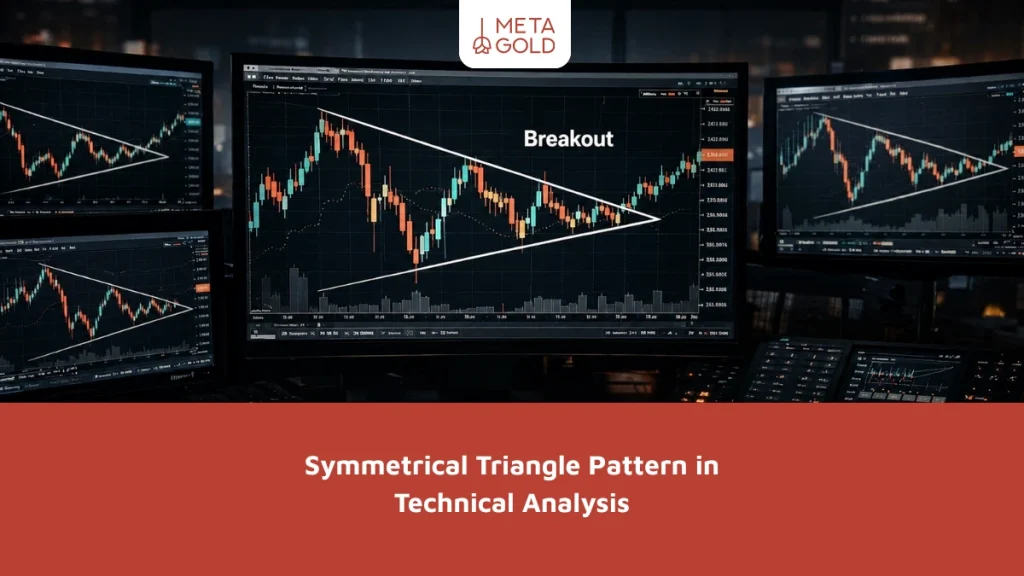
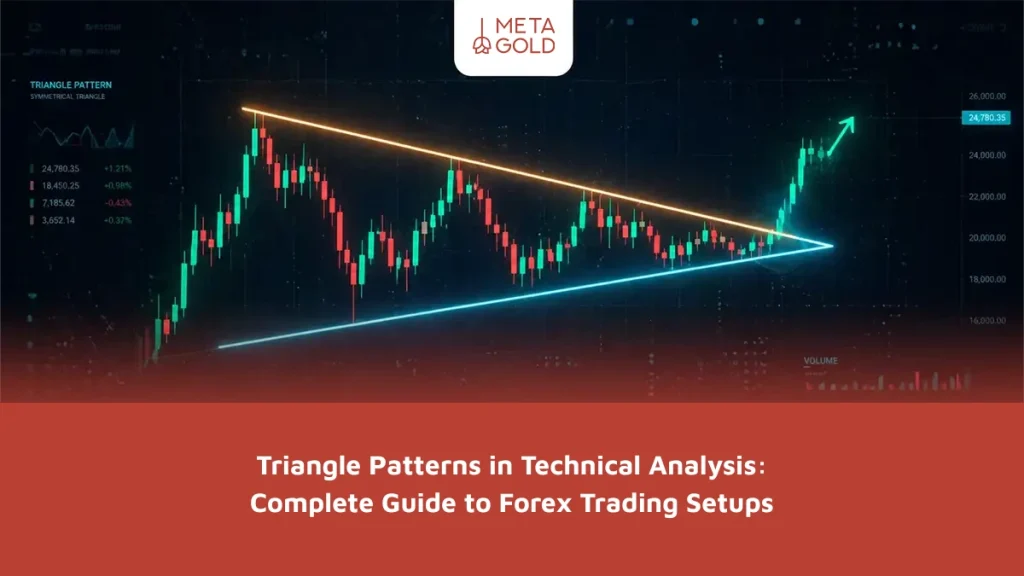
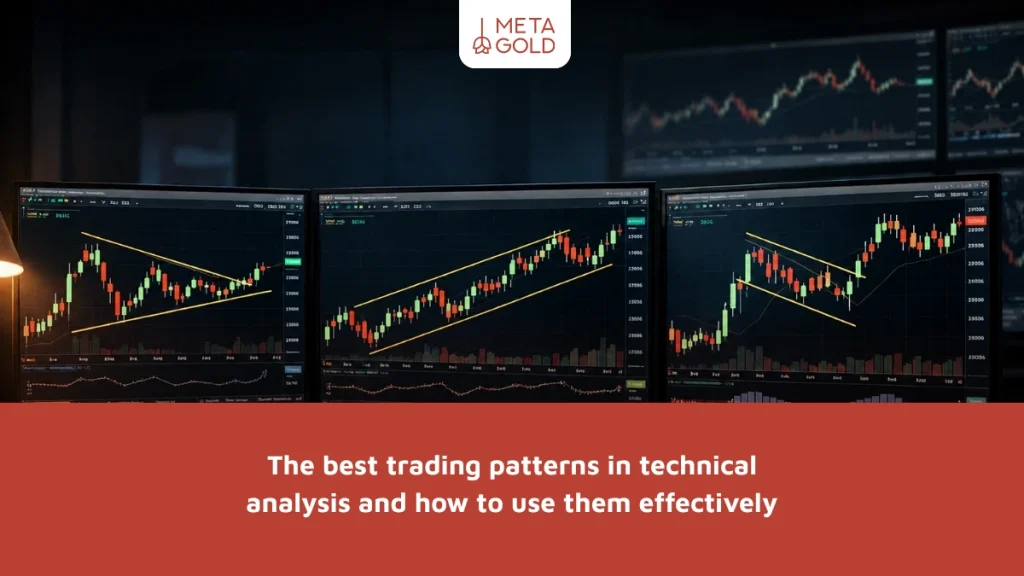
Analyzing price charts and using tools, patterns, indicators, and past market behavior to forecast future price movements.
- Suitable for short- and medium-term traders.
To find precise entry and exit points and better understand price behavior, you need to become familiar with technical analysis in forex, because most professional traders use patterns and indicators to anticipate future market moves.
Fundamental Analysis
Analyzing economic news, interest rates, inflation, employment data, central bank decisions, and political events that affect currency values.
- Suitable for medium- and long-term traders.
To understand the main drivers behind price fluctuations and how economic events impact the market, you need to know how fundamental analysis works in forex—because factors like interest rates, economic reports, and central bank policies directly affect currency values.
Market Psychology
Understanding traders’ collective emotions—fear and greed—managing your behavior during wins and losses, and controlling emotions.
Pros and Cons of Forex: A Realistic Look at the Market’s Opportunities and Risks
Understanding the pros and cons of forex is one of the most important steps in learning. Every market has its own risks and limitations alongside profit opportunities, and forex is no exception. The table below provides a clear comparison of this market’s advantages and disadvantages:
| Advantages | Description | Disadvantages | Description |
|---|---|---|---|
| Very high liquidity | Ability to enter and exit trades quickly at any time of the day | High leverage risk | Leverage can significantly increase profits but also magnifies losses |
| 24-hour market operation | The market operates continuously from Monday to Friday | High price volatility | Can lead to sudden losses, especially for beginners |
| Ability to profit from rising and falling prices | Traders can profit from both Buy and Sell positions | Requires extensive learning and experience | Without proper education and professional analysis, the probability of success is very low |
| Low transaction costs | Spreads and commissions are lower compared to many other markets | Complexity of economic news and fundamentals | Economic news can move prices instantly and make analysis more challenging |
| Easy access and low initial capital | Possibility to start with small capital and various account types | Risk of choosing an unreliable broker | Selecting the wrong broker is one of the main reasons for beginner traders’ losses |
| Wide range of instruments and currency pairs | Ability to trade currency pairs, gold, indices, and more | High psychological pressure and emotional stress | Emotional control is one of the biggest challenges for traders |
Important Tips for Beginner Traders: Advice for a Safe and Proper Start
If you want to understand what Forex is and how to participate in it with the least risk possible, following the tips below is essential. These points come from professional traders’ experience and proven principles that can help increase your chances of success.
- Always start with a demo account: before moving to a live account, practice on a demo account for at least a few weeks.
- Take risk management seriously: don’t risk more than 1–3% of your capital on any single trade.
- Always use a stop-loss: trading without a stop-loss is one of the most common reasons for major losses.
- Choose lower-volatility pairs: to start, focus on major currency pairs.
- Don’t overtrade: placing lots of trades isn’t a sign of professionalism—trade quality matters more than quantity.
- Stay in control of your emotions: fear, greed, impulsiveness, and revenge trading are a trader’s main enemies.
- Stick to a consistent strategy: don’t constantly change your trading method—test it first, then commit to it.
- Stay aware of major economic news: releases like interest rate decisions, NFP, or CPI can cause sharp moves.
- Keep learning continuously: technical and fundamental analysis, as well as trading psychology skills, always need to be updated.
To survive in forex and avoid heavy losses, learning the fundamentals of risk management in forex is essential. Without a precise money management plan, even the best strategies won’t deliver results.
Conclusion: What Is Forex and How Can You Get Started?
In the end, Forex is the world’s largest financial market and offers many opportunities for traders—but those opportunities are only usable if you take education, analysis, and risk management seriously. If you understand what Forex is, how it works, and the principles you should follow to enter it, you can avoid common mistakes and take a more professional path. By starting with a demo account, choosing a reputable broker, learning analysis, and managing your emotions, you can take your first safe and logical steps in this market.
Frequently Asked Questions About Forex
1. Is Forex suitable for beginners?
Yes—but only if you get proper education, practice on a demo account first, and enter the market with solid risk management.
2. What is the minimum capital needed to start Forex?
With many brokers, you can start with $10 to $50; however, for better risk management, it’s recommended to have at least $100 to $200.
3. What’s the best currency pair to start with?
Major pairs like EUR/USD, GBP/USD, and USD/JPY are the best options for beginners because they offer reasonable volatility and low spreads.
4. Is Forex legal?
Forex trading isn’t prohibited for individuals, but in some countries the official activity of brokers is restricted. The key is to use a reputable broker.
5. Can you earn a steady income from Forex?
Yes—but only with proper education, money management, a clear strategy, and emotional discipline. No trader earns steady income without a plan.
6. Is Forex like gambling?
No. Forex is a financial market that relies on analysis and risk management. But if you enter without knowledge, the outcome can effectively resemble gambling.