In the financial markets, all traders are looking for profit; but the path to profit is not the same for everyone. Some people prefer the excitement of quick, short-term trades; others move forward with patience, deep analysis, and a long-term view. Position trading covers exactly the needs of the latter group.
If you want to know how this trading style works, how it differs from other methods, and whether it suits your personality and financial goals, don’t miss this article; in the end, you will undoubtedly gain a clearer vision for choosing your trading path.

What is position trading?
A long-term trading style in which a trader holds a trading position for weeks, months, or even longer. In this method, the trader targets major trends and large price movements rather than short-term fluctuations.
A user who chooses this trading style often makes decisions based on in-depth fundamental and technical analysis and is not in a rush to quickly enter and exit the market.
To better understand the position and concept of this method, we suggest you first read the article “What is Trading” to become familiar with the general concept of trading.
The difference between long-term trading methods and other trading methods
Trading styles differ fundamentally in terms of time frame, decision-making speed, and other factors. To better understand the place of the long-term trading style, it is necessary to examine it alongside methods such as scalping, day trading, and swing trading to clearly identify the differences.
Differences with swing trading
Compared to swing trading , which often has a timeframe of several days to several weeks, this method follows a longer time horizon and is more suitable for people seeking gradual capital growth.
Differences from day trading
In day trading, the trader closes all trades on the same day and takes advantage of short-term fluctuations. However, in long-term trading, the trader pays attention to large market movements and daily fluctuations are less important.
A trader may hold a trading position open for weeks or even months, adjusting their decisions based on fundamental changes and overall market behavior during this time.
Difference from scalping
In scalping , speed, high concentration, and multiple trades play a major role. But long-term trading is more relaxed and puts less psychological pressure on the trader.
To better understand the difference between this style and other methods, you can read the article Types of Forex Trading Styles .
What are the important factors in the position trading method?
Users who choose this method should pay attention to a set of key factors. This trading style will not yield desired results without careful planning and analysis. We will examine some of these factors below:
- Fundamental analysis : Examining economic policies, interest rates, inflation, and macro data plays an important role in decision-making.
- Long-term technical analysis : In this method, the trader uses higher timeframes to identify major trends.
- Capital Management : In this trading style, controlling trading volume and setting a reasonable loss limit is very important.
- Patience and Discipline : This trading method will have no meaning without patience and adherence to the plan.
To design a detailed plan, it is essential to understand the concept of trading strategy and it helps the trader make more informed decisions.
Useful tools in position trading
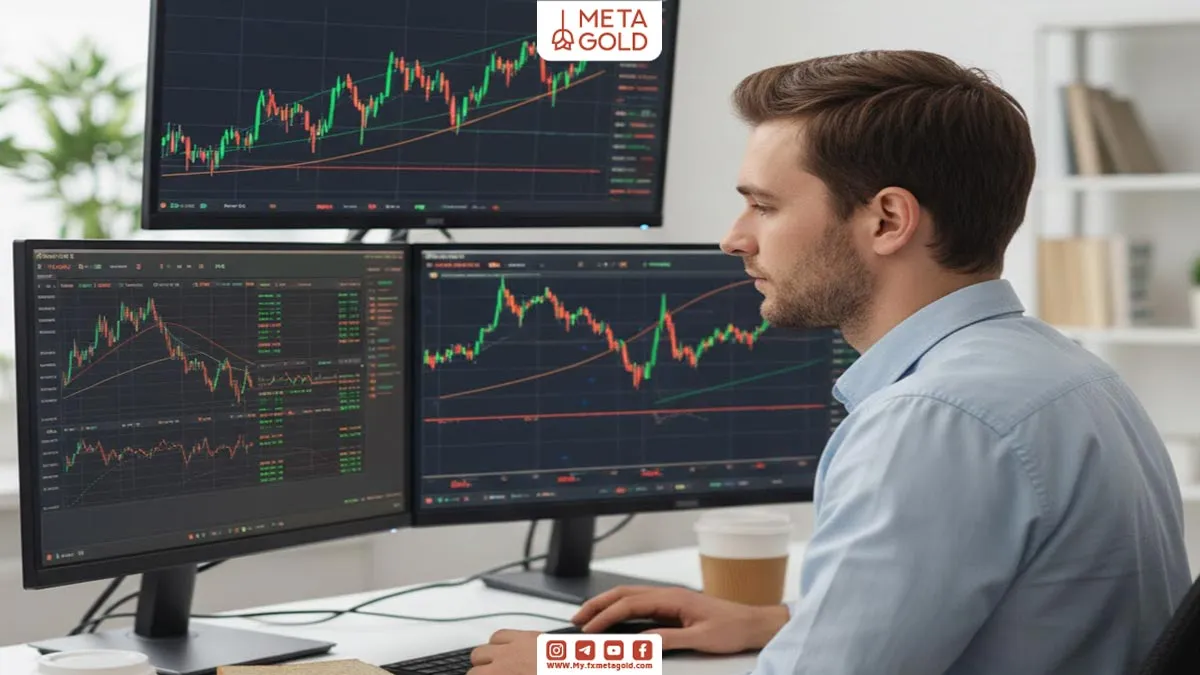
There are tools that play a supporting role in decision-making in this trading style. The trader uses these tools to increase the accuracy of his analysis; below we will examine some of these tools:
- Long-term charts (weekly and monthly)
Examining these charts helps to identify the main direction of market movement and prevent the trader from being caught up in short-term fluctuations. In these timeframes, support and resistance are more reliable and decision-making is more stable. - Indicators such as moving averages
Moving averages are used to identify the prevailing market trend. A price above the moving average can indicate an uptrend, while a price below it can indicate a downtrend; this tool helps traders maintain positions. - RSI indicator
This indicator shows the overbought and oversold situation; it determines whether the price has grown too much or fallen too much. In this way, entry at emotional points is reduced. - Examining macroeconomic trends
Factors such as interest rates, inflation, central bank monetary policies, and economic growth of countries have a direct impact on markets; these factors shape the overall direction of prices in the long term. - Analysis of important economic and political news
Impactful news can strengthen or weaken market trends. Awareness of this news prevents users from making rash decisions without analyzing them.
This set of tools helps users make sound analytical and logical decisions.

Advantages and limitations of trading with a long-term perspective
This trading method, along with the opportunities it offers for long-term profitability, also has its limitations; it is important for a trader to understand the benefits and limitations before choosing this style. Considering the benefits and challenges at the same time helps the trader make a realistic decision.
| Advantages | Limitations and Challenges |
|---|---|
| Focuses on major market trends and large price moves | Requires strong patience and the ability to tolerate short-term volatility |
| Lower psychological pressure compared with short-term trading | Capital can be tied up for long periods |
| Less need to monitor charts continuously throughout the day | Highly sensitive to major macroeconomic news and events |
| Suitable for employed people or those with limited time | Slower reaction to sudden market changes |
| Allows combining fundamental and technical analysis | Requires precise risk and position sizing to avoid large losses |
| Lower trading costs due to fewer trades | Possibility of missing short-term market opportunities |
Putting together the advantages and limitations of this type of trading, it becomes clear that trading this way depends more than anything on the personality and goals of the trader.
Who is position trading suitable for?
This trading style is more suitable for people who:
- They have a long-term vision.
- They avoid hasty decisions.
- They show interest in fundamental analysis.
- They are looking for more peace of mind in trading.
In general, this trading style is suitable for people who have a long-term view, avoid emotional decisions, and can manage short-term market fluctuations.
Those looking for excitement, quick trades, or short-term returns may face more challenges with this trading method.
Ultimately, a thorough understanding of these characteristics helps the trader make an informed decision to choose this trading style as part of their trading path or to move on to other methods.
Is position trading really the right choice?
Position trading is a trading style based on patience, deep analysis, and a long-term view, where choosing a reputable Forex broker plays a crucial role in executing trades properly. This method helps the trader focus on the long-term picture of the market rather than getting caught up in momentary fluctuations.
When a trader has a proper understanding of the market, the tools, and the limitations of this style, they can make more logical decisions and choose their trading path more consciously.
Ultimately, success in this trading method depends more on mental discipline and adherence to the strategy than anything else. If you are a consistent and patient person, this method could be right for you.
Position Trading FAQs
1. What is position trading and what is its purpose?
It is a style of trading in which the trader holds positions for weeks or even months. The main goal of this method is to profit from long-term market trends.
2. How is position trading different from day trading?
In this trading method, decisions are made based on macro and long-term analysis. But in day trading, the trader focuses on short-term fluctuations and closes trades on the same day. For a more detailed comparison, you can read the article What is Day Trading ?
3. Which tools are more important in position trading?
In this style, long-term technical analysis, fundamental analysis, and money management play a key role. High-time frame indicators and analysis of economic conditions also help in decision-making.
4. Who is position trading suitable for?
This style is suitable for people who have a high level of patience but do not want to constantly monitor the market. Also, those who have a long-term analytical view are often more comfortable with this style.
5. Is position trading less risky than other styles?
This trading method has less momentary volatility, but it is still not risk-free. The risk of this style is more related to fundamental changes and poor capital management.